As autumn arrives, cooler temperatures and crisp air signal the ideal season for outdoor improvement. While full-scale hardscaping overhauls require significant planning, minor seasonal refreshes can dramatically update your yard's curb appeal before winter arrives.
One of the most effective weekend landscaping upgrades is defining or upgrading garden borders using natural stone and gravel. Installing crisp, structured borders cleanly separates lawns, garden beds, and walkways, preventing soil erosion, keeping mulch contained, and creating an instantly polished appearance.
Why Fall is the Best Time for Small-Scale Border Upgrades
🍁 Ideal Soil Conditions: Autumn soil retains summer warmth while receiving frequent rain, making digging and grading easier than in dry summer or frozen winter conditions.
🍁 Plant Protection: As seasonal perennials die back, garden edges become clearly visible, allowing you to establish new line boundaries without damaging blooming plants.
🍁 Seasonal Prep: Installing heavy natural stone borders or gravel trenches helps capture leaf runoff and prevents autumn heavy rains from washing away valuable topsoil.
Small-Scale Stone & Gravel Border Ideas for Autumn
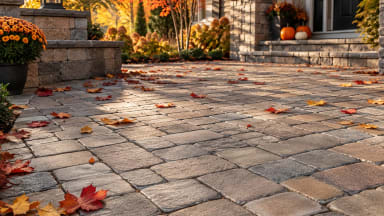
1. The Classic Belgian Block Border
Best For: Defining flower beds, driveways, and formal lawns.
Belgian Block (granite cobblestones) provide a clean, timeless look that balances traditional and contemporary architecture.
How to implement: Trench a 4- to 6-inch border along your lawn’s perimeter, lay a compacted stone dust or mortar base, and set the cobbles tightly side-by-side.
🎯 Pro Tip: Set belgian blocks slightly above lawn level to create a clean line that acts as a natural mowing strip.
Classic Belgian Block Border
2. River Rock & Pebble Dry Creek Borders
Best For: Sloped garden beds, downspout drainage zones, and informal landscape design.
If autumn rains cause washouts along your flower beds, replacing organic mulch with smooth river stone creates a functional, high-contrast border.
Best For: Slight grade transitions, tree rings, and raised garden beds.
For garden beds requiring a slight elevation boost, a low-profile stacked wallstone border adds depth and rustic warmth.
How to implement: Choose thin-cut natural wallstone or flagstone strips. Lay a level gravel base and dry-stack two to three layers of natural stone, staggering the joints for structural stability.
🎯 Autumn Accent: The earth tones of natural brown, gray, or tan wallstone pair well with fall foliage, chrysanthemums, and ornamental grasses.
Stacked Stone Wallstone
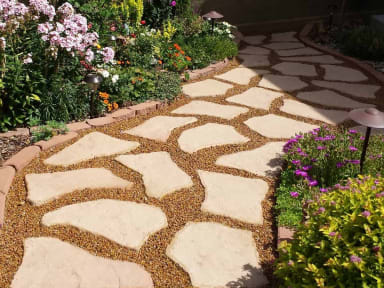
4. Permeable Gravel & Binder Border Pathways
Best For: High-traffic walkways, fire pit boundaries, and modern xeriscaping.
Crushed stone and pea gravel borders offer a clean look, but uncontained gravel can spill onto lawns or walkways.
How to implement: Combine crushed stone or pea gravel with modern structural binders like Gravel-Lok®. This liquid binder locks loose stone aggregates into a solid, durable, yet fully permeable surface that allows water to drain naturally while keeping stones firmly in place.
🎯 Pro Tip: Secure the perimeter using structural paver restraints like SnapEdge® or structural edging like Gator Xtreme Edge® for long-lasting lateral support.
Permeable Gravel contained with Gravel-lok® Edging
Checklist for Installing DIY Stone & Gravel Borders
Before starting a weekend landscape refresh, ensure you have the proper materials on hand:
✅ Excavation Tools: Flat spade, trenching shovel, and hand tamper.
✅ Base Materials: Crushed stone base (CR-6 or stone dust) to ensure proper leveling.
'Now all glory to God, who is able to keep you from falling away and will bring you with great joy into his glorious presence without a single fault. All glory to him who alone is God, our Savior through Jesus Christ our Lord. All glory, majesty, power, and authority are his before all time, and in the present, and beyond all time! Amen.' Jude 1:24-25 https://www.bible.com/bible/116/JUD.1.24-25.NLT